
Protected Species Surveyors
Connecting protected species surveyors with homeowners planning extensions, conversions, outbuildings, demolitions and residential development projects
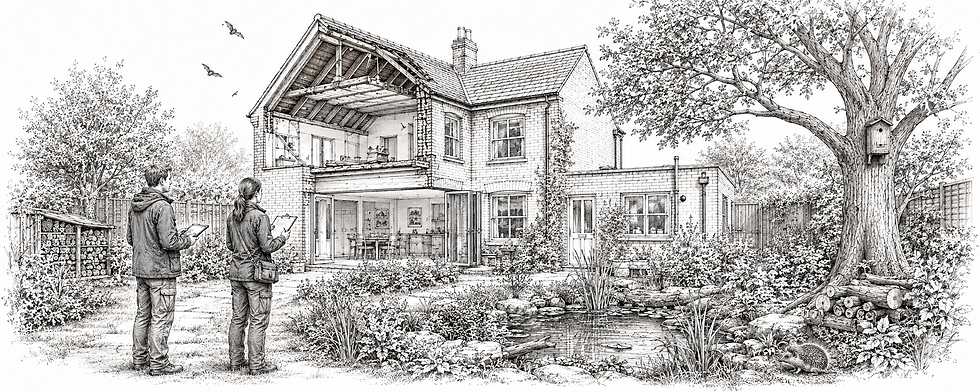
Protected species surveys can become an important part of residential project planning, particularly where works may affect buildings, roof spaces, trees, gardens, ponds, outbuildings, barns, garages or land with ecological value.
A homeowner may begin with a straightforward project, such as a loft conversion, extension, garden building, garage demolition, barn conversion or new dwelling proposal, only to discover that protected species issues need to be considered before planning or building work can move forward.
Protected species surveyors are therefore an important specialist category within the Architectural Partner Network (APN).
APN connects selected protected species surveyors, ecology consultants and specialist environmental survey providers with homeowners and residential project teams at the design, planning and pre-build stage.
This can help homeowners understand whether surveys are required, avoid unnecessary delays, and respond properly to planning or ecological constraints before work starts.
Why protected species surveyors are a strong fit for APN
Many homeowners do not realise that protected species can affect ordinary residential projects.
Protected species surveys may become relevant where a project involves:
-
Loft conversions
-
Roof alterations
-
Dormer construction
-
Barn conversions
-
Garage conversions
-
Outbuilding demolition
-
Tree removal or pruning
-
Extensions near ponds, gardens, hedgerows or woodland
-
Garden buildings and annexes
-
New dwellings or replacement dwellings
-
Works near watercourses
-
Rural properties
-
Older buildings
-
Properties with large gardens
-
Sites near open land or ecological habitats
-
Demolition or vegetation clearance
-
Planning applications where the local authority requests ecological evidence
For homeowners, this can feel unexpected. They may assume that protected species issues only apply to large developments, countryside sites or major planning applications. In reality, smaller residential works can also raise ecological questions depending on the building, location, roof structure, garden setting and surrounding habitat.
APN gives protected species specialists a route into real homeowner projects where early professional advice can prevent confusion, delay and unnecessary risk.
Common protected species survey requirements
Protected species work may cover several different areas depending on the site and project.
Homeowners may need advice or surveys relating to:
-
Bats
-
Nesting birds
-
Great crested newts
-
Reptiles
-
Badgers
-
Dormice
-
Otters
-
Water voles
-
Barn owls
-
Other protected or priority species
-
Habitat suitability
-
Preliminary ecological appraisals
-
Species-specific surveys
-
Mitigation strategies
-
Licence requirements where applicable
-
Planning condition discharge
-
Ecological method statements
For many residential projects, bats and nesting birds are the most common concerns, particularly where roof spaces, loft conversions, older buildings, barns, garages, trees or demolition works are involved.
However, gardens, ponds, ditches, hedgerows and adjacent open land can also create protected species considerations.
A suitable surveyor can help identify what is genuinely required and what level of assessment is proportionate.
Protected species surveys can be seasonal
One of the biggest reasons to identify protected species requirements early is timing.
Some surveys can only be carried out at certain times of year, or they may be more reliable during specific seasons. If the requirement is discovered late, the project may be delayed until the appropriate survey window is available.
This can affect:
-
Planning submission timing
-
Planning validation
-
Planning determination
-
Condition discharge
-
Builder start dates
-
Demolition programmes
-
Roof works
-
Vegetation clearance
-
Tree works
-
Site preparation
-
Construction sequencing
Homeowners often do not expect ecology to influence the programme. They may already have a preferred build start date, a builder lined up, or a planning application in progress.
APN referrals can help protected species surveyors become involved earlier, when the homeowner still has time to respond properly and avoid unnecessary disruption.
Typical residential projects that generate protected species survey enquiries
Protected species survey opportunities can arise from a wide range of residential works, including:
-
Loft conversions
-
Dormer loft conversions
-
Roof alterations
-
Barn conversions
-
Garage demolitions
-
Outbuilding conversions
-
Rear extensions
-
Side extensions
-
Rural extensions
-
Garden buildings
-
Annexes
-
New dwelling proposals
-
Replacement dwellings
-
Demolition of existing structures
-
Tree works
-
Works near ponds or watercourses
-
Properties near woodland or open land
-
Large garden redevelopment
-
Planning applications requiring ecological support
-
Planning conditions requiring protected species information
The requirement may vary greatly from project to project. Some homeowners may only need preliminary advice. Others may require a formal survey, report, mitigation strategy or further specialist input.
The key is to identify the issue early enough for the project to move forward in a controlled way.
Bats, roof works and loft conversions
Bats are one of the most common protected species issues in residential projects.
They can become relevant where works involve:
-
Loft conversions
-
Roof replacements
-
Dormer construction
-
Rooflights
-
Chimney works
-
Older roof structures
-
Barns and outbuildings
-
Buildings with gaps, tiles, eaves or roof voids
-
Demolition or major alteration of existing buildings
A homeowner may be surprised to find that a loft conversion or roof alteration could require bat-related advice or survey work, particularly if the property is older, rural, near trees or close to suitable habitat.
A protected species surveyor can assess whether there is potential for bat roosting, whether further survey work is needed, and what mitigation or timing considerations may apply.
For APN partners, these enquiries are often connected to genuine residential projects where the homeowner needs clear and timely advice.
Great crested newts, ponds and garden development
Protected species surveys may also be relevant where a property has a pond, is close to ponds, or sits within an area that may support great crested newts or other ecological interests.
This can affect:
-
Garden buildings
-
Annexes
-
New dwellings
-
Extensions into garden land
-
Garage or outbuilding works
-
Landscaping
-
Site clearance
-
Drainage works
-
Projects near ponds, ditches or watercourses
Homeowners may not recognise the ecological significance of a pond or wet area, particularly where it is not within their own garden but nearby.
A protected species consultant can help assess the risk, advise whether further survey work is needed, and support the planning process where protected species issues arise.
Nesting birds, trees and vegetation clearance
Nesting birds can become relevant where projects involve tree removal, hedge removal, ivy clearance, demolition, roof works or vegetation clearance.
This is particularly important where homeowners are preparing a site before construction or trying to clear areas for access, scaffolding, drainage, foundations or landscaping.
A protected species surveyor can advise on:
-
Timing of vegetation clearance
-
Whether nesting bird checks are needed
-
How to avoid disturbance
-
Whether ecological watching briefs are appropriate
-
What mitigation or enhancement measures may be required
This is often a practical issue. If homeowners or builders begin clearance without advice, they may create avoidable ecological and legal risk.
APN can help connect homeowners with specialists before these risks become a problem.
Why APN referrals are different from ordinary lead platforms
Protected species surveyors can already receive enquiries through Google, ecological directories and general lead platforms. However, many enquiries are unclear, reactive or urgent.
A homeowner may simply ask:
“Do I need a bat survey?”
But the proper answer depends on the property, project, roof structure, habitat, local authority requirements, timing, planning context and whether further ecological assessment is needed.
APN is different because many referrals are connected to real residential project activity.
The homeowner may already be considering:
-
Planning drawings
-
A loft conversion
-
A roof alteration
-
A garden building
-
A garage or outbuilding demolition
-
A rural extension
-
A barn conversion
-
A new dwelling
-
Planning validation requirements
-
Planning conditions
-
Pre-build project preparation
This gives protected species surveyors a better starting point.
Rather than receiving a vague enquiry with limited project context, APN partners may be introduced to homeowners who are actively progressing a project and need proper protected species advice, surveys or planning support.
The experience behind APN
The Architectural Partner Network (APN) is built by practising residential design and planning professionals, supported by over 40 years’ experience in residential design, planning and pre-build project guidance across London and the Home Counties.
This matters because protected species issues often connect directly with planning strategy, roof alterations, demolition, garden development, construction timing, tree works, landscaping and pre-build coordination.
APN is shaped by practical residential project experience. This helps the network understand when protected species surveyors are likely to be needed, what information homeowners may already have, and why properly matched introductions can be more valuable than generic enquiries from mass lead platforms.
Opportunities for protected species surveyors
For protected species surveyors and ecology consultants, APN can create introductions to homeowners at the point where advice, surveys or reports may be needed.
This may include enquiries for:
-
Bat surveys
-
Bat emergence surveys
-
Preliminary roost assessments
-
Great crested newt surveys
-
Reptile surveys
-
Badger surveys
-
Nesting bird surveys
-
Barn owl surveys
-
Dormouse surveys
-
Habitat suitability assessments
-
Preliminary ecological appraisals
-
Protected species reports for planning
-
Mitigation strategies
-
Ecological method statements
-
Planning condition discharge support
-
Licence-related advice where applicable
This can be especially valuable for ecological practices that want relevant residential enquiries connected to real project activity rather than vague or last-minute survey requests.
Working alongside design, planning and project teams
Protected species advice often needs to be coordinated with the wider project.
A protected species surveyor may need to work alongside:
-
Residential designers
-
Planning consultants
-
Arboricultural consultants
-
Tree surveyors
-
Landscape designers
-
Drainage consultants
-
Building contractors
-
Approved inspectors
-
Project managers
-
Homeowners
-
Local planning authorities
-
For example, a bat survey may influence a roof alteration or loft conversion. Nesting bird advice may affect site clearance. Great crested newt considerations may affect garden development. A planning condition may need to be discharged before works begin.
APN can help connect protected species specialists earlier, reducing the risk that ecological requirements are discovered too late.
Helping homeowners understand protected species costs properly
Homeowners often find protected species surveys frustrating because the requirement can feel unexpected and technical.
Costs may depend on:
-
Species risk
-
Site location
-
Building type
-
Habitat type
-
Time of year
-
Number of survey visits required
-
Whether evening or dawn surveys are needed
-
Whether a report is required for planning
-
Whether mitigation advice is included
-
Whether planning conditions need discharging
-
Whether licence-related advice is required
-
Whether further ecological assessment is needed
APN can help homeowners connect with specialists who can explain what is required, what is proportionate and how the survey process fits into the wider project.
This supports APN’s wider aim of helping homeowners make better-informed project decisions before committing to major costs.
APN Partner benefits for protected species surveyors
Selected APN partners may benefit from more than just project introductions.
Depending on membership level and category availability, protected species survey partners may benefit from:
-
Early-stage homeowner introductions
-
Referrals connected to planning, roof works, extensions and outbuildings
-
Category visibility through APN content
-
A dedicated APN partner profile page
-
APN Verified Partner status
-
Use of the APN Verified Partner badge
-
Association with a professional residential project network
-
Better positioning with homeowners needing planning-stage ecological support
-
Potential visibility from protected species, bat survey and ecological survey search traffic
-
Practical website and conversion support where separately agreed
This can be especially useful for surveyors and ecology consultants who already provide professional protected species advice but want better-qualified residential enquiries connected to real projects.
Why protected species surveys are an important APN category
Protected species surveys are an important APN category because they can affect whether a residential project can be planned, approved, timed and carried out lawfully and responsibly.
If protected species issues are missed or discovered late, the project can face delays, redesigns, planning difficulties or construction restrictions.
This category also connects naturally with other APN sectors, including biodiversity and ecology surveyors, tree surveyors, landscape designers, planning consultants, building contractors, roofers, loft conversion specialists, garden building companies and project managers.
For the right protected species survey partner, APN can provide access to homeowners who are already planning meaningful residential projects and need specialist ecological guidance at the right time.
Become an APN protected species survey partner
The Architectural Partner Network is designed for selected professionals and companies who want to be introduced to better-quality homeowner project opportunities at an earlier stage.
For protected species surveyors and ecology consultants, APN offers a route into residential projects where homeowners may need bat surveys, great crested newt surveys, nesting bird checks, reptile surveys, protected species reports or planning-stage ecological support.
APN is not intended to be a generic lead-selling platform. The aim is to connect homeowners with suitable, vetted professionals who can add genuine value to their project.
If your practice provides protected species surveys, bat surveys, great crested newt surveys, nesting bird surveys, reptile surveys or ecological planning support for residential projects, APN membership may provide a valuable route to homeowners planning extensions, roof works, loft conversions, outbuildings, conversions and new dwellings.
Apply to become an APN Verified Partner and register your interest in the protected species survey category.
Not sure which APN membership is right for you?
Book a short Partner Suitability Call and we will talk through your service category, preferred territories, the type of project enquiries APN receives, and whether Starter, Growth or Priority membership is the best fit for your business.
Book a Partner Suitability Call →